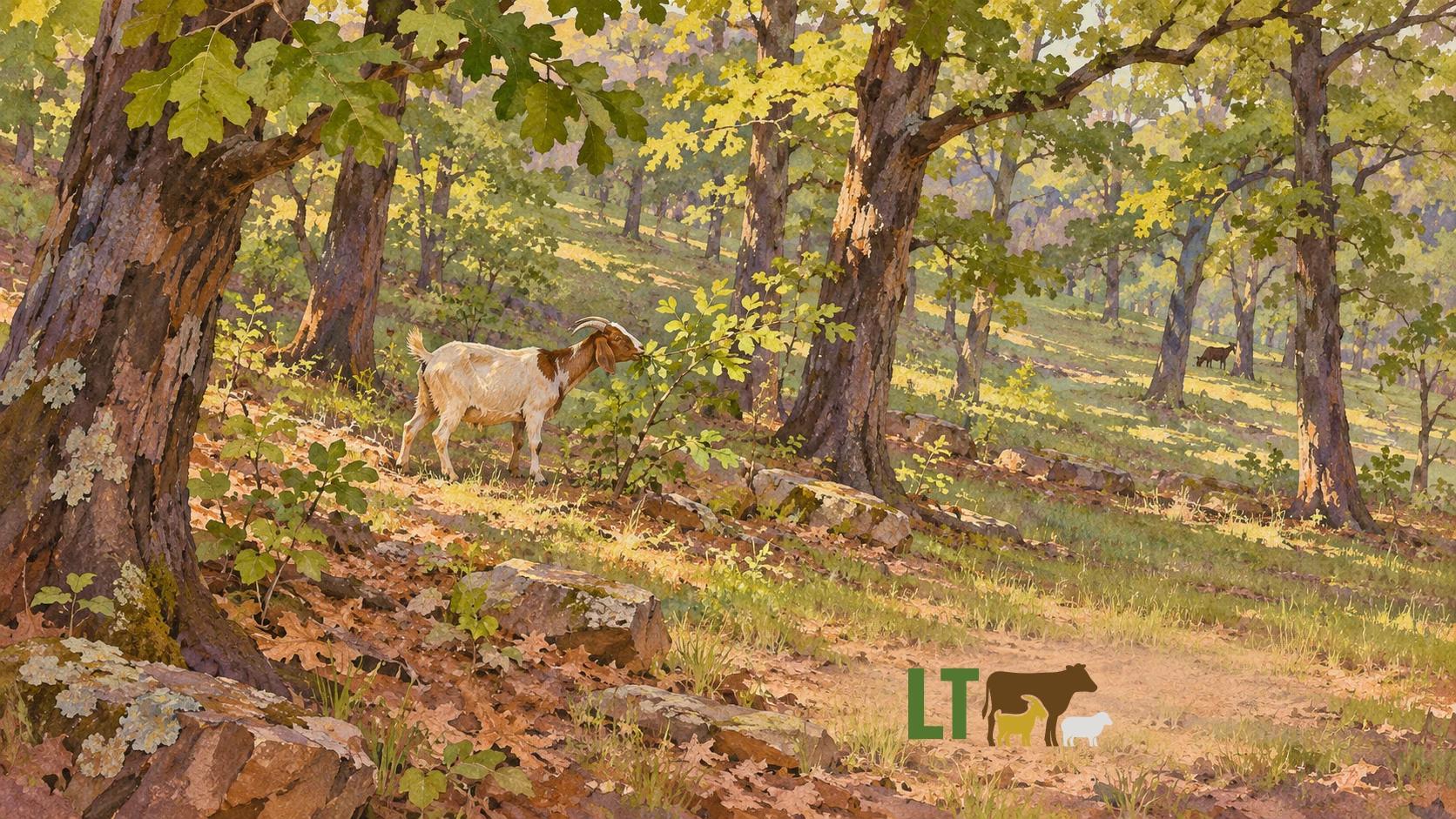
A woodland can serve two different goals
Under an oak canopy, openings give grasses and wildflowers space to grow. A team looking to restore open woodland might judge success by the return of native plants typical of that habitat. A team developing silvopasture, which brings trees, forage and livestock together on the same land, might put more weight on the mix of grasses and legumes animals can eat.
Those goals can overlap. But right after goats strip leaves from low branches, neither team knows what will fill the space. That’s what made the University of Missouri and U.S. Forest Service field comparison useful. The researchers came back to the same plots to see what grew.
The team returned to the same patches
At the Onyx site in Mark Twain National Forest, the team compared goat browsing in spring, in fall, and in early spring before leaf-out plus fall. Other areas received prescribed fire, meaning a planned burn carried out under controlled conditions. One treatment combined a spring browse with a burn, and some areas were left untreated for comparison.
The researchers marked permanent field plots. In small squares within each plot, they estimated how much ground each kind of plant covered, from grasses and flowering plants to shrubs and young trees. They surveyed in summer before the work began in 2019 and returned in summer 2022. The later visit let them see a shift that a photograph taken at the end of a goat visit would miss.
Spring browsing changed the mix
Of the approaches tested, spring browsing gave the researchers the most promising mix for forage. Warm-season grasses made up more of the remaining mix, legumes held their place, and other broadleaf plants took up less space. The study did not show a clear increase in the amount of grass cover across treatments. The change was mainly in the balance of plants.
The field trial told a different story about browsing before leaf-out and again in fall. That treatment suppressed both woody and nonwoody plants. Fire alone increased cover of species the researchers used as signs of open oak woodland. The University of Missouri’s account explains why the same land manager might value these outcomes differently. The comparison identifies useful choices for similar sites to investigate, with no universal browse schedule or stocking rate.
Watch the goats, then go back for the plants
Picture two plots that both look open when the goats leave. By summer, grasses could fill the open patches in one plot while shrubs send up new shoots in the other. A fixed view can help a team revisit when goats reached a patch or whether they tended to pass it by. Plant surveys tell the team what returned and how much space it covered.
For a university follow-up, Livestock Technologies can help plan repeatable views of selected patches and keep footage tied to each site and date. That can give field crews a shared view of the animals’ use of a patch alongside their own vegetation surveys. Our monitoring approach, documented field work and university research capabilities explain the tools we bring to a custom project. The Ozark study measured plants in person; a camera would be a separate addition to a new trial.
What would your field team want to see?
Bring your plot layout and the question you want to answer about browsing. We can talk through where repeat views would help and where field measurements should do the work.
Discuss a woodland research project →