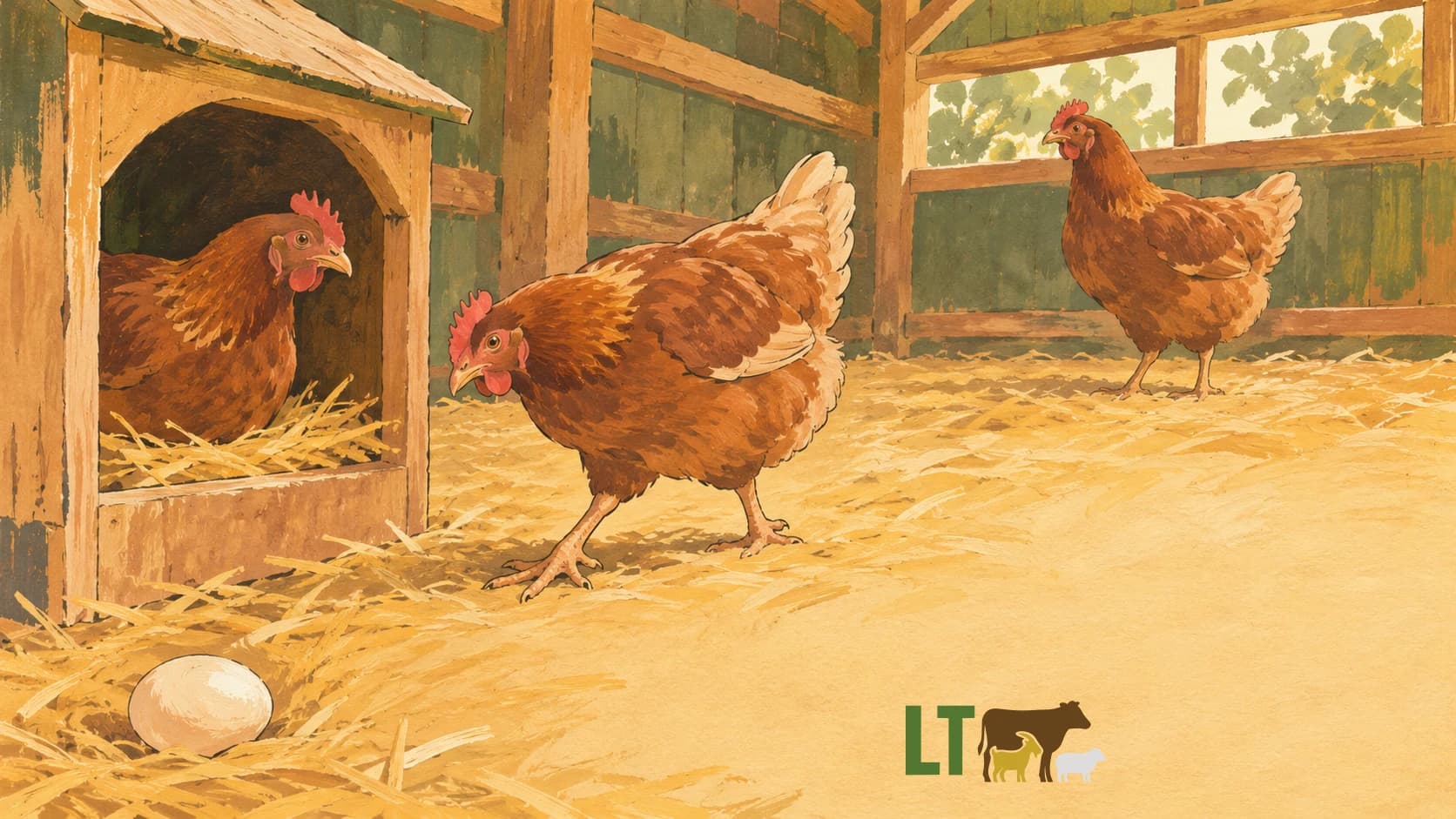
Start with the egg, then widen the view
Floor eggs are eggs laid outside the intended nests. For an egg producer, the question is practical: what would help more hens lay in the right place? A University of Georgia Extension guide describes how housing conditions and management can influence that choice.
The guide includes a useful warning. In work involving a robot in broiler breeder houses, fewer eggs appeared on the floor, but many appeared on raised slats between nests. A better result in one area did not mean the nesting problem had disappeared.
That distinction changes the conversation. Instead of asking only whether a troublesome corner has fewer eggs, ask where the eggs are now. Floor, slats and nests belong in the same picture. Methods for breeder houses and commercial laying houses also need to fit their different systems.
The nest count is only a starting point
A house can contain several nests without hens using them evenly. University of Kentucky poultry specialist Jacquie Jacob explains that birds in small flocks may concentrate in just a few boxes. Her guidance highlights suitable nests, clean bedding and a more secluded nesting space.
Those small-flock recommendations are not a commercial aviary design standard. Their useful lesson here is about actual use: the number of boxes alone does not describe where hens choose to lay.
For a facility team, this suggests a more focused discussion with its poultry adviser. Are hens approaching the nests, entering them, or spending time elsewhere before an egg appears? Each scene gives the adviser something more specific than a total collected at the end of the day.
Picture a corner that seems to improve
Imagine a house where eggs repeatedly appear near one end of a nest row. After a planned adjustment, the crew finds fewer eggs there. That looks encouraging.
Now imagine eggs appearing farther along the same row. If the team watches only the original spot, it may miss that change. A wider view could show hens walking past the first nest entrance and settling elsewhere.
This is a hypothetical example, not a reported farm outcome. It shows why following the hen and checking the other egg locations can be more useful than celebrating a local reduction too quickly.
The decision might be to investigate the nest approach rather than repeat the same adjustment throughout the building. The producer and poultry adviser still choose the management response. Observation helps them ask a clearer question; it does not choose the answer for them.
Give the people in the house a shared view
A short visit and a later egg collection show different parts of the story. Retained footage can let the manager, staff and adviser return to the same period and discuss what they see together.
A useful proposed camera view would include the nest approach and nearby floor, rather than just a close-up of an egg. The footage could help staff locate a recurring sequence and bring it to the next advisory conversation.
Collection records and direct checks remain important. A camera view cannot establish egg cleanliness or replace the farm's egg-handling and animal-care procedures. Keep those decisions with the people responsible for the flock.
Build the observation around your nesting question
Livestock Technologies joins capture, field connectivity, processing and access to source footage. For a poultry facility, we can discuss that infrastructure around the nest area and the periods the team needs to review.
Automatic egg detection or recognition of nesting behavior would require separately scoped development and testing. The first conversation can stay simple: which repeated event is difficult for your team to see, and what view would make it easier to understand?
Our technology overview and documented field work explain the infrastructure approach. The university capabilities brief also helps facilities working with a college research partner plan a shared observation project.
Never lose an animal.
What happens before the floor egg appears?
Bring your house layout and the nesting question. We can discuss a focused observation scope for your facility.
Discuss a poultry observation project →