Start with a real pen, not a camera specification
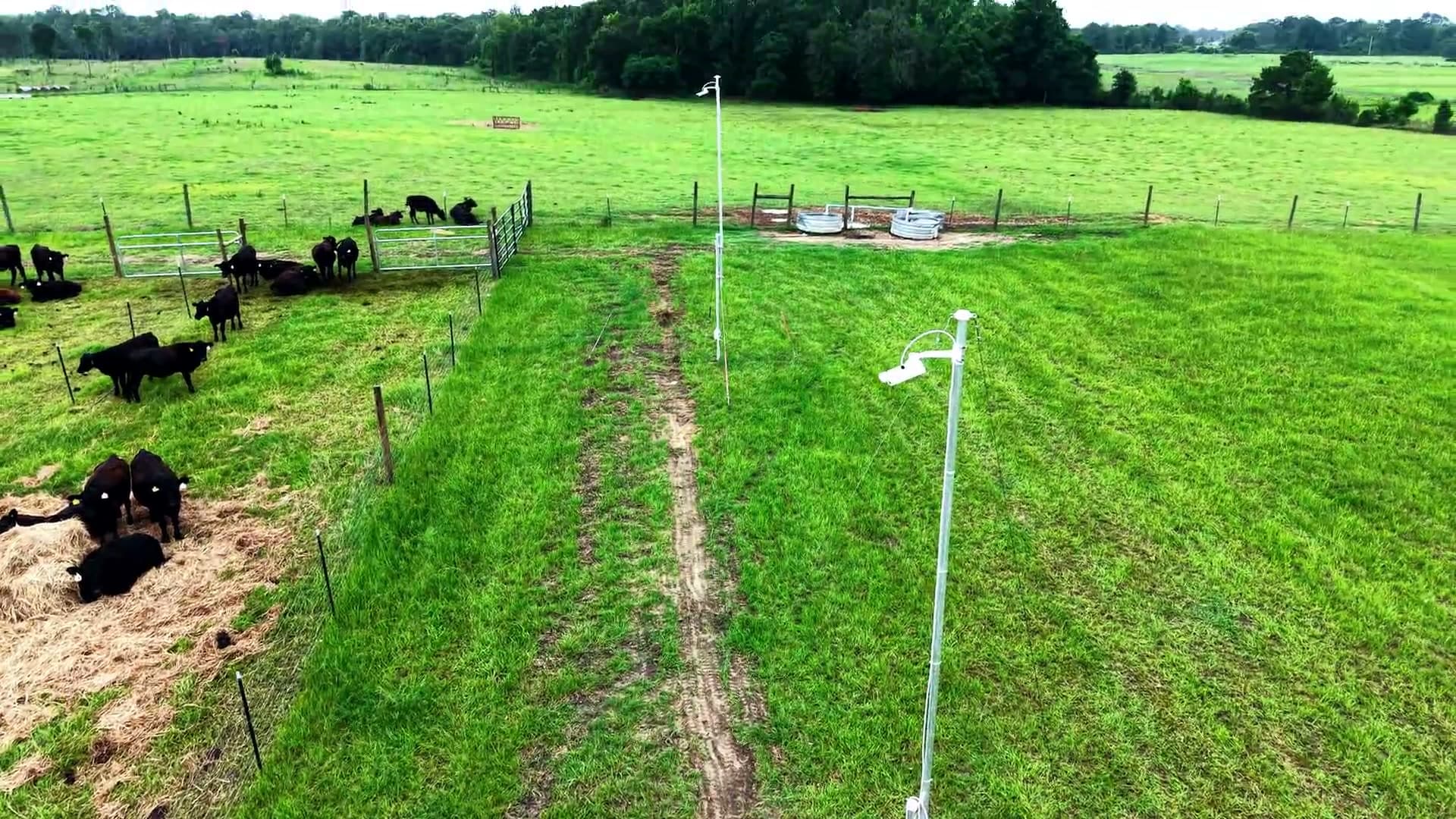
Look at the field frame above. Cattle are spread across the pens; a few are close to the gate, and others are farther from the masts. A feedlot manager can immediately ask the useful question: from this position, which cattle and working areas will a fixed camera actually see?
At Tuskegee University's four-pen research site, Livestock Technologies installed field nodes with digital and thermal views, solar-supported power, wireless links, and on-site processing and storage. It is a documented university installation, not a claim that a commercial feedlot already uses this exact layout.
For a commercial deployment, we would walk the pen map and the job the crew wants help with. A camera aimed to observe cattle at a bunk has a different useful view from one intended to watch a gate or compare pen occupancy. The first design decision is the operating question; mounting height, angle and coverage follow it.
The field system needs more than a lens
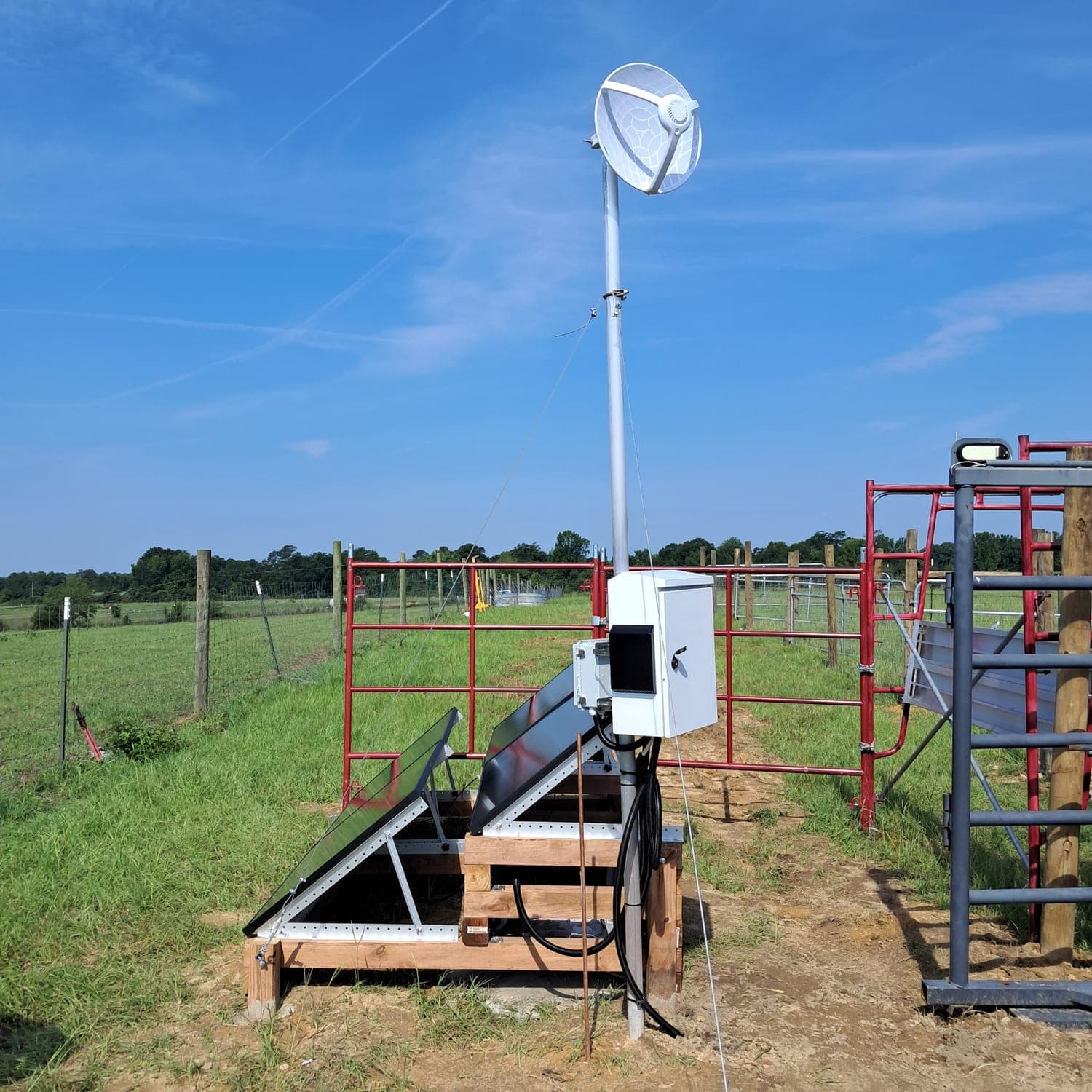
The camera needs a stable position, field power and a connection back to the on-site system. At Tuskegee, solar-supported nodes provide field power while wireless links carry imagery to the local computer. That computer processes and stores the camera record; our camera-to-decision overview shows how a person can review it.
The precise power and network design depends on the yard. A long alley, metal buildings, pen geometry and the available mounting locations can change the layout. That is why a useful sales conversation starts with a real site plan, not a universal camera count.
See what the installed camera actually sees
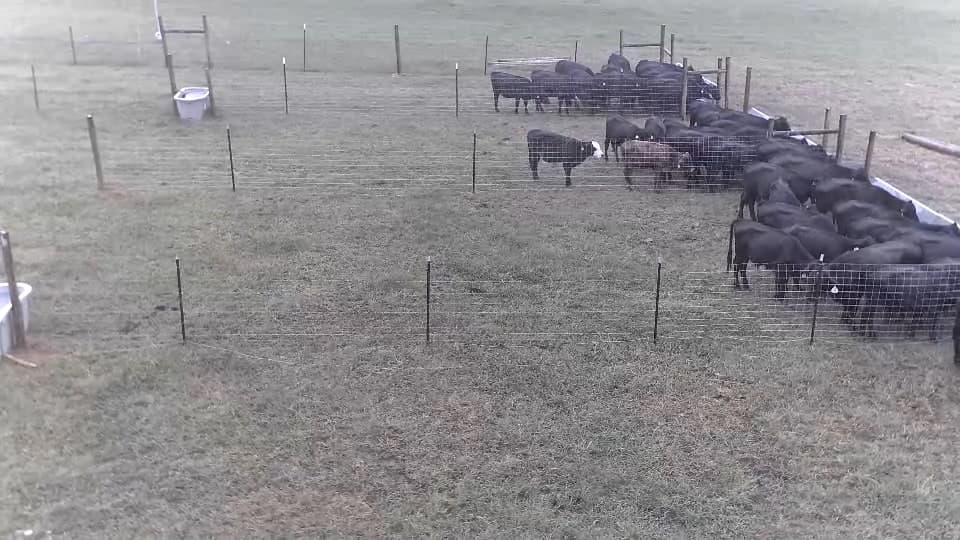
This source frame is different from the aerial film image. It is the sort of pen-level view an operator would inspect: cattle along the bunk, the fence line and the open area in the same frame. Time-stamped footage lets a person revisit what was visible before or after a pen check, rather than relying on a single snapshot or memory of the last round.
Our continuous monitoring system is built to organize cattle observations around those field views. The crew still decides whether a visible change needs a direct check, and a veterinarian directs diagnosis and treatment. Cameras extend visibility between rounds; they do not replace stockmanship.
What a feedlot deployment conversation covers
Bring one area of the yard and one decision that matters there. For example, if you want better visibility into a receiving pen between crew rounds, show us its boundaries, working gates, power options and where the team already looks for cattle information. We can discuss which views would be useful, what the on-site equipment needs and what a focused first deployment would cover.
Our feedlot overview explains the operator-facing workflow. The field report shows what we have actually built, while this hardware tour helps you picture how a site-specific design begins. We aim for little-to-no routine maintenance in normal operation; the final support scope belongs in the deployment plan for the equipment selected.
Never lose an animal.
Show us the pens you want to understand better.
We'll review your yard layout, the cattle question your crew needs answered and a practical camera-and-on-site-system scope. There is no need to arrive with an equipment list.
Discuss a feedlot deployment →