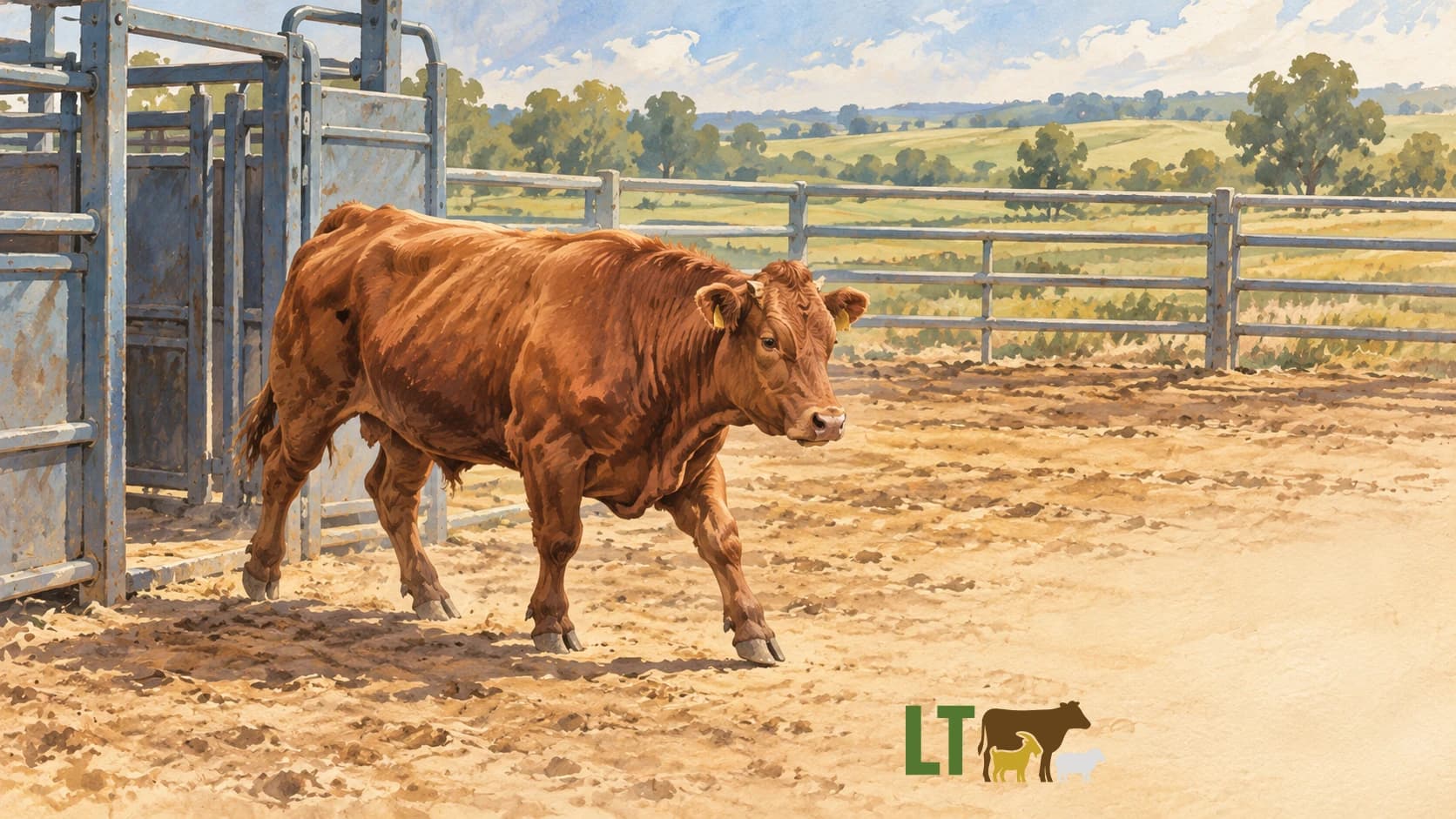
The same cattle, seen at different stages
In a paper published July 21, 2026, USDA Agricultural Research Service and Texas Tech University researchers followed 245 crossbred steers. The experiment ran in 2020–21, with measurements at arrival, roughly four months later and near the end of feeding.
The team measured exit velocity: how fast an animal covered a fixed distance after leaving the working chute. The intermediate and more excitable groups slowed over time. Yet the temperament groups remained different from each other.
That distinction matters. A lower speed later in the study did not erase the differences between groups. A changing number and a persistent group pattern can both be real.
Growth and familiarity travel together
The researchers found that exit speed decreased as body weight increased. They also discussed growing familiarity with the facilities and handling. Those effects could not be fully separated in this study because both changed as the feeding period progressed.
The result gives researchers a better question than simply asking whether an animal became calmer: how much of the observed change belongs to growth, experience or their combination?
This was a study of crossbred steers. It does not establish the same pattern for every breed, sex or handling setting.
Temperament has more than one visible expression
South Dakota State University Extension describes handling temperament through an animal's response to people and movement. Its guidance separates exit speed from behavior while restrained in a chute and response to a person in a pen.
Each gives the observer a different moment in the handling experience. An animal leaving the chute is doing something different from an animal standing inside it.
SDSU recommends repeated assessments when the results will inform breeding or culling. That is a useful reason to look beyond one memorable passage. It also helps a research team explain exactly which response its chosen measure describes.
Virginia Tech Extension discusses calm handling and acclimation—becoming familiar with a situation—as part of cattle management. A temperament study therefore has an animal-care setting as well as a measurement setting.
A slower exit can open a better research conversation
Imagine a university team that sees lower exit speeds at a later visit. The first interpretation might be improved comfort with handling. A collaborator then points out that the cattle are also heavier.
Returning to the handling footage could help them discuss what visibly changed: the approach, the release and the animal's movement into the pen. Comparing that scene with the direct speed and weight measurements gives the discussion a firmer starting point.
This is a proposed research example, not a result from the Texas Tech study. The practical payoff is a more precise follow-up question. The team can investigate familiarity and growth without treating one explanation as settled by the speed alone.
Keep the animal visible beside the measurement
Livestock Technologies builds the capture and data infrastructure that lets university teams return to animal observations. At our documented Tuskegee installation, fixed digital and thermal views connect with on-site processing and storage. Controlled-chute capture also preserves face, muzzle and visible ear-tag references.
For a handling study, we can discuss a custom view of the relevant area and how the team would retrieve source footage alongside its own measurements. Any automatic exit-speed or temperament analysis would need a separately defined and tested scope.
The technology overview explains the observation platform, and our university capabilities brief gives collaborators a starting point. The aim is a useful connection between what the animal did and the question the scientists want to answer.
Never lose an animal.
What handling response does your study need to understand?
Bring the cattle group, handling setting and biological question. We can discuss a focused observation and data scope with your university team.
Discuss a cattle research project →