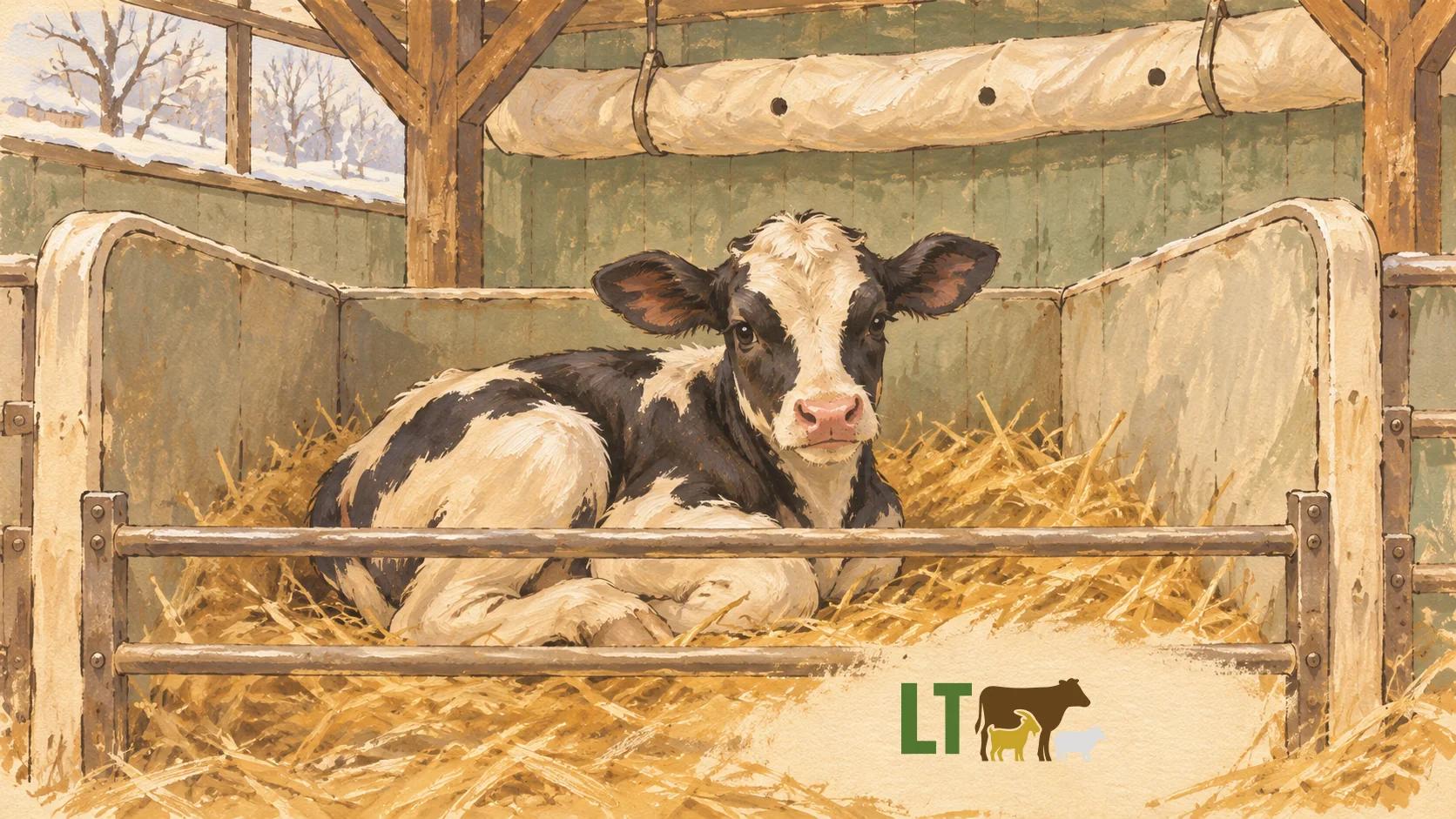
The aisle and the pen can have different air
Walk into a barn on a cold morning and the sheltered pens may look reassuring. Solid dividers block drafts and limit contact between neighboring calves. Yet that protection can also make it harder for fresh air to reach the space inside.
The University of Wisconsin’s calf-barn renovation guide explains the problem. Young calves give off relatively little heat, so warm air rising from their bodies does little to draw air through their pens. A barn can have reasonable air exchange overall while individual pens remain poorly ventilated.
That makes the calf’s resting space part of the ventilation design. An open aisle, a high ceiling and a fan rating do not describe the air a calf breathes behind a divider.
A breeze and fresh air do different jobs
A circulation fan moves air already inside a building. Air exchange replaces indoor air with outside air. Mixing can help distribute incoming air, but moving the same room air around does not, by itself, replace it.
Wisconsin’s November 2026 winter ventilation guide describes the seasonal challenge: closing a barn against the cold can reduce air movement. Moisture and gases still need a way out. The goal is fresh air reaching calves gently, alongside suitable protection from cold.
When discussing equipment, ask what job the fan serves. Does it bring outside air in, pull indoor air out or circulate air within the room? Those roles can work together, but they are different parts of the plan.
Why the fabric tube matters
One option is positive-pressure tube ventilation: a fan pushes outside air into a long fabric tube overhead. Small holes release that air along the tube, spreading it toward the calf spaces.
The tube is more than a sleeve for the fan. Its diameter, hole sizes and hole positions work with the fan’s capacity to control delivery. The winter guide describes these as coordinated design choices that should get fresh air to calf level without a draft. A bigger fan alone does not answer that question.
The renovation guide adds two easily overlooked details. The intake should draw from outdoors, rather than an attached barn holding older animals. The building also needs an outlet for air to leave. A tube can supplement existing ventilation; it does not remove the need for that complete path.
Bring the question down to calf level
Imagine a barn being converted from adult-cow stalls to calf pens. The planned fan has enough capacity for the room, but the new solid dividers change where its air can travel. Before buying, the crew can ask a ventilation adviser to assess delivery inside the occupied pens, including the resting areas.
Smell alone cannot settle the question. Wisconsin’s air-quality guide describes localized ammonia pockets and explains that people can become less sensitive to its odor over time. Direct air measurements can reveal conditions that a walk through the aisle misses.
Have the adviser consider air movement and air quality together with the pen layout. That discussion is more useful than choosing equipment from room size alone. It also keeps a sheltered place to rest and a fresh supply of air in the same conversation.
Keep the calves in the picture
When a team changes a housing layout, fixed video can help staff revisit where calves rested and how they used the space between rounds. Match those views with independent airflow and air-quality measurements. Video shows the animals and their surroundings; it does not measure the air passing through a pen.
Livestock Technologies can help scope the views, recording and access to original footage for that work. See our monitoring workflow, documented field work and university research capabilities when planning a farm or campus calf-housing project.
Which calf spaces do you need to see?
Bring your pen layout and the housing change you want to follow. We can discuss a practical monitoring scope for your calf barn.
Discuss calf-barn monitoring →