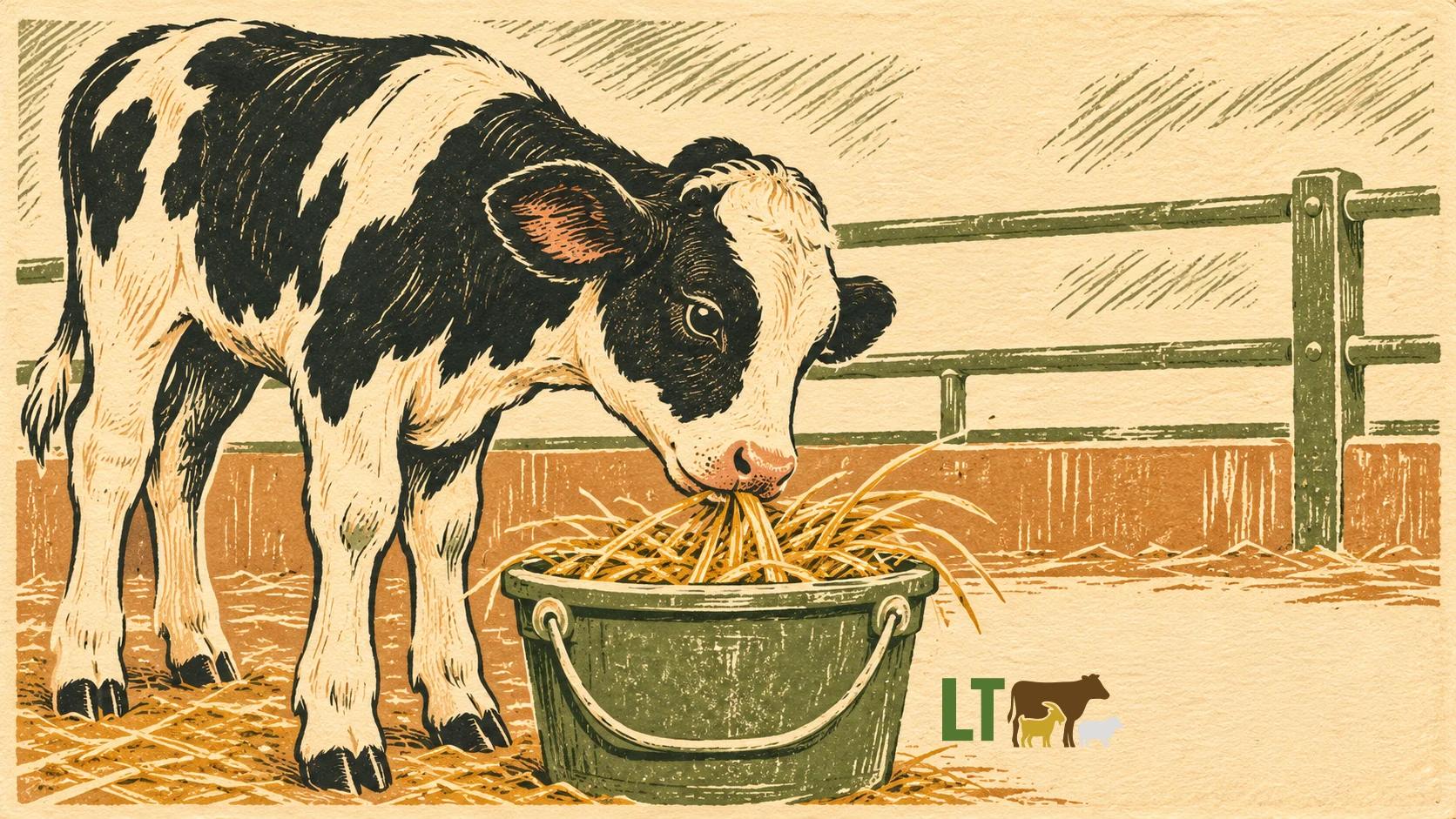
Watch what the calf is chewing
A calf pulls a strand of hay from a bucket. Later, the same calf lies down and chews its cud: feed it has brought back up to chew again. A calf licking a rail may move its mouth just as often, but the movement serves a different purpose.
That distinction matters when researchers compare calf housing or feeding equipment. A calf near a feeder may eat, explore the rim or mouth the hardware. If all three actions count as feeding, the feeder can look busier without showing that calves spent more time eating.
Long hay made a difference in both feeders
In a UC Davis study published in 2023, researchers compared three groups of individually housed Holstein calves. All received milk replacer and starter grain. Two groups also received long hay. One got hay in a bucket; the other pulled it through openings in a pipe.
The pipe asked calves to use their tongues to draw out the strands. The researchers wanted to know whether that extra work would change how the calves used their mouths when they were away from feed.
Calves offered hay spent more of the observed day eating and chewing cud. They also showed less of some nonfeeding mouth behavior, such as mouthing objects. On that measure, the pipe showed no clear advantage over the bucket. In fact, the calves with buckets ate more hay in the sixth week.
That gives researchers a useful starting point: treat hay access and feeder design as two different changes. The trial tested young calves in individual pens and found that hay did not eliminate all repetitive mouth behaviors. It did not establish how these feeders would work in shared pens.
The story continues after the milk round
A second UC Davis study followed mouth behaviors over full days. Mouthing objects peaked near milk feedings but happened at other times as well. Much of the cud chewing occurred overnight. A study that only watches the milk round could miss a large part of how calves use their day.
Imagine two university pens with the same hay and the same milk schedule. The study team is comparing how calves use a bucket and a pipe. A useful view would show what the calf pulls out, then let reviewers follow it when it steps away. Seeing a muzzle behind the bucket is less useful than seeing what the animal actually does.
Growth is a separate question. A University of Idaho project report describes a study testing whether earlier access to forage could help calves keep growing after weaning, when milk feeding ends. The report describes the plan. It does not report an outcome. Watching the calves and weighing them would give that kind of study different pieces of evidence.
Set the view around the calf, not just the feeder
For a study of mouth behavior, the angle matters. A side view can show the calf taking hay; a wider view can show where it settles afterward. The team can choose a view and test whether a reviewer can tell those actions apart under normal barn lighting.
Livestock Technologies can help a research team plan fixed views, time-stamped recording and access to original footage. That gives staff a way to return to the same meal or overnight observation. The research team still defines the behaviors and measures any feed intake directly.
See our monitoring workflow, documented field work and university research capabilities for how we scope observation infrastructure.
What does your calf study need to see?
Bring the pen layout and your feeding question. We can discuss which views and recording windows would help your team answer it.
Discuss a dairy calf research project →